



Production Stages

Before Printing
Consumers very often decide to consume a product based on the packaging the product is in rather than the product that is placed in the packaging. İn order for your product to stand out on the consumers shelves a correct design is a must.
İn the first stage of production which is called the Prepress section the needs of the customers are determined. The packaging designs are prepared according to the needs of the customer or existing designs are made suitable for printing. By using the flexo printing technique we provide great benefits for the customers with high quality and low cost plates.
Our experienced packaging prepress team uses advanced technologies, Professional equipments and up-to-date software to make customer ideas become reality. İn this way, the visual quality of the products is guaranteed.
Extrusion
The raw material taken as granules (granules) is turned into an extrusion film with various additives to provide the desired product properties. The corona process is the technique of applying electron bombardment to the surface in order to ensure that the inks and other coating materials adhere to synthetic and other metal surfaces. adhesive, lacquer) adhesion. Therefore, it is definitely applied to the corona before printing.


Printing
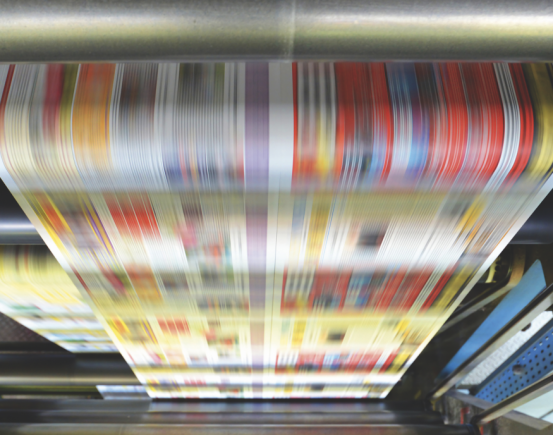
Ink is applied on the film using the flexography method. This process is an important process that requires a lot of attention. Good equipment and experienced workers are required to get the right colors and to make a quality print. Products reach maximum quality with high technology sensitive machine park. Printing machines capable of flexo printing up to 8 colors provide a quality printing service by ensuring the continuity of the print quality with the automatic printing monitoring system.
Lamination
The lamination of the films, the flexo printing of which has been completed, is carried out by lamination techniques with and without solvent. In food products, lamination processes are applied to prevent the printed surface from coming into contact with food. The products are laminated with two or more layered combinations of BOPP, CPP, PE, PET, BOPA, ALU and paper products. Adhesives in compliance with food safety standards are used during lamination processes.
In addition, thanks to the lamination process, the shelf life of the packaged products is increased by adding strength and barrier properties to the packages. Lamination processes to be applied according to the sectors of the produced products vary. The determining factor here is customer expectations.
Slicing
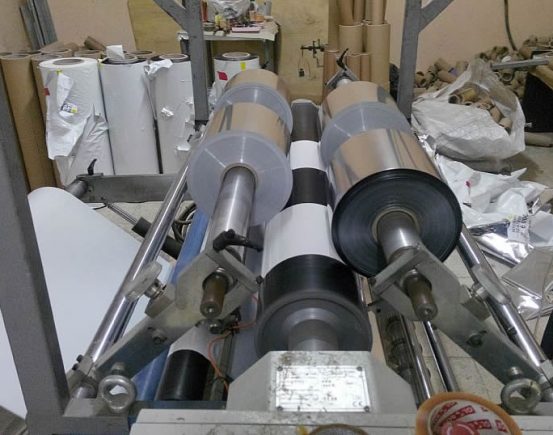
The products, whose printing and lamination are completed, are sliced to the desired extent and rolled. If the products will be used in automatic packaging machines, they are transferred directly to the storage and shipping department. If the products are to be produced as bags, they are cut into the desired size in the cutting machines and turned into bags in line with the demand of the customer. During the cutting and bag making process, pillow type, bellows, doypack, quattro, zip-lock bag productions are offered to the customers.
In addition, wicket bags can be produced for automatic filling lines. With the completion of the last stage in production, the products produced with “tailor-made sensitivity” are ready for shipment.
Cutting
The cutting process is the process of the final product being created. Products are cut with a hot knife and the product edges are weld shut. On the other hand, operations such as tape reinforcment, hole punching, side cut and bottom seams are applied.

Forwarding
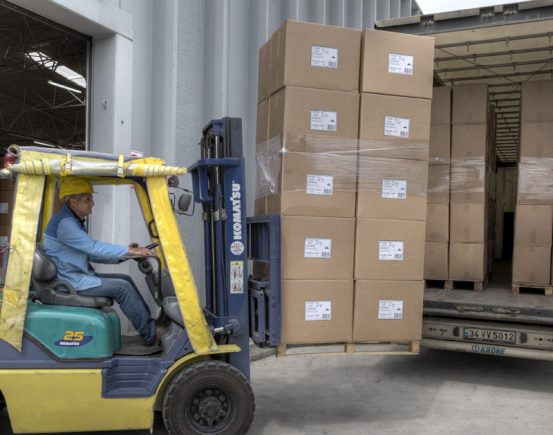
After all stages are finished, the product is packaged and delivered to the customer.
Happy Ending 🙂 🙂